Month: April 2026

wow cataclysm leveling guide

Wow Cataclysm Leveling Guide: A Comprehensive Plan (Updated 04/28/2026)

Embark on a swift journey to level 85! This guide, crafted by gaming expert Joey Brown, offers strategies for efficient Cataclysm leveling today.

Welcome to the shattered world of Azeroth! Cataclysm dramatically reshaped the original zones, offering a revitalized leveling experience for both veterans and newcomers. This guide focuses on maximizing your efficiency from levels 80 to 85, navigating the altered landscapes and new questlines.

Leveling in Cataclysm differs significantly from previous expansions due to the zone revamps and streamlined questing. Expect a faster pace, with a greater emphasis on dynamic quests and exploration. Joey Brown, a seasoned gamer and reporter, brings his expertise to help you conquer these challenges. Prepare to adapt to the changing world and optimize your path to the level cap, utilizing the strategies detailed within this comprehensive plan.

Why Cataclysm Leveling is Unique

Cataclysm’s leveling experience stands apart due to the complete overhaul of the classic world. Zones like Dun Morogh and Elwynn Forest were dramatically altered, presenting familiar areas in a completely new light. This isn’t simply a graphical update; questlines, mob placements, and even the zone layouts have been redesigned.

This revamp creates a more cohesive and engaging leveling journey. As gaming expert Joey Brown highlights, the changes encourage exploration and offer a sense of progression even within the original content. Furthermore, the introduction of streamlined questing and a faster leveling pace makes Cataclysm a uniquely efficient expansion to power through, preparing you for the challenges of Dragon Soul.

Choosing Your Class for Optimal Leveling

Selecting the right class significantly impacts your Cataclysm leveling speed and enjoyment. Some classes naturally excel at solo content, while others thrive in groups. Consider your preferred playstyle. Do you prefer a self-sufficient experience, or do you enjoy tackling challenges with allies?

As experienced gamer Joey Brown suggests, classes with strong self-healing or high damage output tend to level faster. However, don’t solely focus on efficiency. Choose a class you find fun! A motivated player will always outperform a skilled player on an unwanted class. We’ll delve into specific class recommendations for both solo and group leveling scenarios in the following sections.

Classes Excelling in Solo Leveling

For players who prefer independence, several classes shine in Cataclysm’s solo leveling landscape. Hunters, with their pet companions and ranged damage, consistently perform well. Warlocks, boasting powerful demons and strong self-healing, are also excellent choices. Survival Hunters and Affliction Warlocks are particularly efficient.

Furthermore, Death Knights, especially Blood spec, offer incredible survivability, allowing them to withstand significant damage. Paladins, with their healing abilities and strong defenses, are another solid option. As Joey Brown, a seasoned gamer, points out, these classes minimize downtime and maximize quest completion rates, making solo progression smoother and faster.

Classes Strong in Group Leveling

Cataclysm’s dungeons offer a rapid path to 85, and certain classes truly excel within a group setting. Holy Paladins and Restoration Druids are premier healers, keeping the team alive through challenging encounters. Protection Warriors and Blood Death Knights provide robust tanking, mitigating damage effectively.

Damage dealers like Balance Druids, Fire Mages, and Enhancement Shamans bring substantial burst and sustained damage. As experienced gamer Joey Brown suggests, these classes synergize well, creating a balanced and efficient dungeon group. Their abilities complement each other, leading to quicker clears and faster leveling overall, maximizing the benefits of group play.

Leveling Zones: A Tiered Approach

Cataclysm revamped the leveling experience, introducing a tiered zone approach for optimal progression. Starting at level 80, Mount Hyjal and Vashj’ir serve as initial zones, offering introductory quests and storylines. As you reach 82, Deepholm and Uldum present mid-level challenges, with denser quest hubs and more complex narratives.

Finally, the Twilight Highlands become accessible at 84, providing the final push to 85. This tiered system, as gaming expert Joey Brown would advise, ensures a smooth and engaging leveling curve. Each zone builds upon the last, preventing stagnation and maintaining player interest throughout the journey to the level cap.

Tier 1: 80-82 – Mount Hyjal & Vashj’ir (Initial Zones)

Mount Hyjal offers a familiar, terrestrial experience, focusing on the aftermath of the Firelands raid and the restoration of the world tree. Expect quests centered around defending the area from Ragnaros’s lingering forces. Conversely, Vashj’ir provides a unique underwater leveling experience, requiring adaptation to a new movement style and combat mechanics.

These zones, as a seasoned gamer like Joey Brown would point out, are ideal for getting acquainted with Cataclysm’s revamped questing system. Prioritize completing the main storylines in both zones to unlock further content and efficiently reach level 82, preparing for the challenges ahead in Deepholm and Uldum.

Tier 2: 82-84 – Deepholm & Uldum (Mid-Level Zones)

Deepholm, a zone carved deep within the earth, presents a visually striking and lore-rich environment. Quests here revolve around the Old Gods and the encroaching corruption they represent. Expect a darker, more ominous atmosphere compared to the initial zones. Uldum, inspired by Indiana Jones, offers a desert landscape filled with ancient Egyptian-themed ruins and quests focused on uncovering forgotten secrets.

As Joey Brown, a veteran gamer, would advise, efficiently navigating these zones requires balancing quest completion with dungeon runs. These zones provide a good stepping stone, preparing players for the final push to 85 in the Twilight Highlands, while offering unique storylines.

Tier 3: 84-85 – Twilight Highlands (End-Level Zones)

The Twilight Highlands represent the culmination of the Cataclysm storyline, a zone steeped in conflict between the dragon aspects and the encroaching Twilight’s Hammer cult. Expect challenging quests, a dramatic atmosphere, and a sense of urgency as you approach the level cap. This zone is visually distinct, featuring broken landscapes and corrupted wildlife.

As experienced gamer Joey Brown suggests, maximizing efficiency here involves prioritizing quests that offer significant experience rewards and completing any remaining dungeon objectives. The Twilight Highlands provide a fittingly epic conclusion to the Cataclysm leveling experience, preparing you for end-game content.

Questing Strategies for Efficiency

Maximizing questing efficiency is paramount for rapid leveling in Cataclysm. Focus on completing quest hubs – concentrated areas with multiple interconnected quests – rather than scattering across the zone. This minimizes travel time and maximizes experience gains per hour. Utilize the in-game quest tracker diligently, prioritizing quests with high experience rewards and those that lead directly into other quests.

As gaming expert Joey Brown emphasizes, efficient questing isn’t just about speed; it’s about smart choices. Grouping quests that share objectives or locations further streamlines the process. Remember to pick up all available quests before venturing out, and consider using online resources to map out optimal questing routes.

Prioritizing Quest Hubs

Quest hubs are the cornerstone of efficient Cataclysm leveling. These concentrated areas offer a cluster of quests, reducing travel time significantly compared to picking up isolated tasks. Focus on completing all quests within a hub before moving on, creating a streamlined experience flow. Look for hubs with diverse quest types – kill, collect, escort – to avoid monotony.

As experienced gamer Joey Brown suggests, identifying key hubs early is crucial. Mount Hyjal’s initial questing area and Deepholm’s central zones are excellent examples. Prioritize hubs that unlock further quest lines or access to new areas, accelerating your progression. Remember to check quest descriptions for hub connections.

Utilizing Quest Tracking Tools

Maximize leveling speed with effective quest tracking. While the in-game quest log is functional, dedicated tools significantly enhance efficiency. Addons like Questie or TomTom display quest objectives directly on the world map, minimizing map checking. These tools pinpoint exact locations, saving valuable time wandering aimlessly.

As a seasoned gamer like Joey Brown knows, streamlining information is key. Consider using a quest completion tracker to monitor progress within a hub. This helps identify incomplete quests and prevents backtracking. Regularly update your tracking tools to ensure compatibility and access the latest features. Don’t underestimate the power of a well-configured interface!

Dungeon Leveling: A Fast Track

Accelerate your leveling process through Cataclysm dungeons! Dungeons offer concentrated experience gains and valuable gear upgrades. They provide a break from open-world questing and introduce diverse gameplay. However, efficient dungeon runs require preparation and understanding.

As a lifelong gamer, Joey Brown emphasizes the importance of knowing dungeon mechanics. Utilize the Dungeon Finder tool to quickly assemble a group. Communicate effectively with your team, especially if you’re new to a specific instance. Prioritize dungeons known for fast completion times and high experience rewards. Remember, a coordinated group significantly boosts leveling speed!

Best Cataclysm Dungeons for Leveling

Maximize your experience gains with these top-tier Cataclysm dungeons! Blackrock Caverns (80-81) is excellent for initial leveling, offering a straightforward experience. Throne of the Tides (81-82) provides a good balance of challenge and reward, with decent gear drops.

Stonecore (82-83) and Halls of Stone (82-83) are efficient choices, though Stonecore can be more complex. Twilight Fortress (83-84) offers a thematic experience and solid rewards. Finally, Blackwing Descent (84-85) provides a challenging end-game dungeon experience, boosting your character towards the level cap. Remember, Joey Brown suggests prioritizing speed over difficulty when leveling!

Dungeon Finder Tips & Tricks

Master the Dungeon Finder for seamless leveling! Always select the “Tank” or “Healer” role for significantly faster queue times, even if playing a DPS class. Joey Brown emphasizes that patience is key; queue times vary. Communicate with your group – a little coordination goes a long way!

Don’t be afraid to ask questions if you’re unfamiliar with a dungeon. Focus on completing objectives quickly rather than meticulously clearing every corner. Utilize the Dungeon Finder’s pre-made group feature to find dedicated leveling teams. Remember to thank your group at the end – good sportsmanship is always appreciated!

Professions and Leveling Synergy

Boost your leveling with strategic profession choices! Gathering professions like Herbalism, Mining, and Skinning provide consistent income and experience while exploring zones. Joey Brown suggests these are excellent for supplementing quest rewards. Crafting professions, such as Alchemy or Blacksmithing, offer gear upgrades, but require more gold investment.

Consider professions that complement your class; for example, Alchemy for potion support or Engineering for gadgets. Don’t spread yourself too thin – focus on one or two professions initially. Selling gathered materials on the Auction House can fund your leveling journey, creating a self-sufficient cycle.

Gathering Professions (Herbalism, Mining, Skinning)

Maximize experience and gold with gathering skills! Herbalism allows collecting valuable herbs for Alchemy, while Mining yields ores crucial for Blacksmithing and Jewelcrafting. Skinning provides leather for Leatherworking, offering consistent resources. As Joey Brown notes, these professions synergize beautifully with exploration.

Each zone boasts unique nodes; utilize online resources to pinpoint high-yield locations. Gathering while questing minimizes wasted travel time. Selling raw materials on the Auction House provides a steady gold stream, funding gear upgrades and training. These professions are low-cost to learn and offer immediate returns, making them ideal for leveling characters.

Crafting Professions (Alchemy, Blacksmithing, etc.)

Boost your self-sufficiency and income with crafting! Alchemy provides potions and flasks for increased leveling speed, while Blacksmithing crafts powerful weapons and armor. Professions like Enchanting and Jewelcrafting enhance existing gear. As a lifelong gamer like Joey Brown understands, crafting offers diverse benefits.

Leveling crafting skills requires gathering materials – synergizing with gathering professions is key. Early recipes are inexpensive, but higher-level crafts demand significant investment. Selling crafted items on the Auction House can generate substantial gold. Consider focusing on a single crafting profession to maximize efficiency and specialization, creating a reliable income source throughout your leveling journey.

Gear Optimization During Leveling

Maximize your character’s effectiveness with smart gear choices! While constantly chasing the “best” gear isn’t efficient, strategic upgrades significantly speed up leveling. Prioritize items with stats that enhance your primary role – Strength/Agility for DPS, Intellect for casters, and Stamina for all. As Joey Brown, a seasoned gamer, knows, incremental improvements add up.

Heirlooms are invaluable, scaling with your level and providing experience bonuses. Bind on Equip (BoE) items found as drops can offer substantial temporary upgrades. Don’t hesitate to replace gear every few levels, focusing on item level and relevant stats. Remember, a well-geared character kills faster, completing quests and dungeons more efficiently.

Heirlooms: The Leveling Advantage

Heirlooms represent a cornerstone of efficient Cataclysm leveling. These special items, purchased with gold or various currencies, scale with your character, remaining useful throughout the entire leveling process. Crucially, they provide an experience bonus, accelerating your progress significantly. As gaming expert Joey Brown emphasizes, this bonus stacks, making a noticeable difference over time.

Focus on acquiring heirloom pieces for your weapon, chest, legs, shoulders, and trinkets first. Prioritize stats relevant to your class and specialization. While expensive initially, the long-term benefits – faster leveling and reduced gear replacement – far outweigh the cost. Heirlooms are a worthwhile investment for any serious leveler.

BoE (Bind on Equip) Items to Look For

While Heirlooms are fantastic, don’t overlook Bind on Equip (BoE) items! These items, dropping from dungeons and open-world content, can provide substantial upgrades during leveling. They aren’t tied to your character, allowing you to sell or trade them, but once equipped, they become soulbound. As a seasoned gamer like Joey Brown knows, identifying valuable BoEs is key.

Focus on items with stats that complement your class and specialization. Check the Auction House regularly for good deals, and don’t hesitate to compare prices. BoEs can bridge the gap between heirloom pieces and provide a significant power boost, making questing and dungeons smoother and faster. Prioritize weapon upgrades!

Talent Builds for Leveling Speed

Optimizing your talent build is crucial for rapid leveling! Forget complex endgame setups; focus on talents that enhance your damage output or survivability while solo questing. As a lifelong gamer, Joey Brown emphasizes prioritizing active talents – those you use frequently. Avoid passives that offer minimal impact;

For DPS classes, talents boosting direct damage or area-of-effect capabilities are ideal. Tanks should focus on self-healing and threat generation. Healers need talents that improve mana efficiency and quick casts. Experiment to find what feels best, but remember, speed is the goal. Respecs are relatively inexpensive, so don’t be afraid to adjust!

Damage Dealer (DPS) Talent Recommendations

For maximizing DPS leveling speed, prioritize talents that amplify burst damage and AoE capabilities. Joey Brown, a seasoned gamer, suggests focusing on talents reducing cooldowns or increasing critical strike chance. Classes like Mages and Hunters benefit greatly from talents enhancing instant casts for mobility while questing.

Rogues should invest in talents improving energy regeneration and combo point generation. Warriors excel with talents boosting rage generation and cleave damage. Remember, consistent damage output is key. Avoid talents reliant on specific raid mechanics; leveling is about efficient solo play. Regularly assess your damage meters to refine your build for optimal performance.

Tank & Healer Talent Recommendations

Tanking and healing while leveling requires a balance of survivability and efficient threat/mana management. As Joey Brown emphasizes, prioritize talents reducing cooldowns on defensive abilities for tanks. Paladins and Warriors benefit from talents enhancing self-healing and block chance. For healers, talents improving mana regeneration and direct healing output are crucial.

Druids should focus on talents offering versatile healing options and efficient shapeshifting. Priests excel with talents boosting flash heal and shield effectiveness. Remember, solo leveling as a tank or healer demands self-sufficiency. Avoid talents heavily reliant on group support; focus on sustained survivability and resource management.

Important Cataclysm Leveling Tips

Maximizing efficiency requires more than just questing and dungeons. As a seasoned gamer like Joey Brown would advise, mastering flight paths is paramount – minimize travel time! Regularly clear your inventory; bank often to avoid becoming encumbered. Utilize the auction house strategically to sell unwanted items and acquire necessary consumables.

Don’t neglect daily quests; they provide substantial experience and reputation gains. Grouping with others can accelerate leveling, but don’t hesitate to solo content when appropriate. Remember to repair your gear frequently to maintain optimal performance. Finally, stay aware of your surroundings and enjoy the journey!

Utilizing Flight Paths Effectively

Cataclysm’s zones are vast, making efficient travel crucial. As a veteran like Joey Brown understands, unlocking flight paths is a top priority in each new area. Prioritize paths connecting major quest hubs to minimize running time between objectives. Remember, discovering all paths within a zone unlocks instant travel to any location.

Plan your routes strategically, chaining flight paths together to cover significant distances quickly. Regularly check your map for newly discovered paths and add them to your mental roadmap. Don’t overlook less obvious paths; they can save valuable minutes. Efficient flight path usage translates directly into faster leveling!

Managing Your Inventory

A cluttered inventory halts progress; efficient management is key; As a seasoned gamer like Joey Brown knows, constantly freeing up space is vital during Cataclysm leveling. Regularly visit vendors to sell unwanted items – grays are always safe to discard! Utilize bank alt characters for extra storage if available, or invest in larger bags as soon as possible.

Prioritize keeping quest items, crafting materials (if pursuing professions), and potential upgrades. Don’t hoard “just in case” items; assess their usefulness. Learn to use the search function within your inventory to quickly locate specific items. A clean inventory means less time sorting and more time questing!

Avoiding Common Leveling Pitfalls

Leveling isn’t always smooth sailing; anticipate and avoid common setbacks. As an experienced gamer like Joey Brown understands, Cataclysm presents unique challenges. Be wary of ganking in contested zones – utilize phasing and awareness. Don’t waste excessive time on quests offering minimal experience; prioritize efficiency.

Poor gold management can cripple progress. Avoid unnecessary spending on cosmetic items early on. Resist the urge to constantly re-spec talents; stick to a leveling build. Finally, don’t get stuck in endless grinding loops – diversify your activities between questing, dungeons, and professions to prevent burnout.

Dealing with Ganking & PvP

Cataclysm’s open world can be a haven for opportunistic players. As a seasoned gamer like Joey Brown knows, ganking is prevalent. Utilize phasing – quickly move between zones to escape persistent attackers. Awareness is key; scan your surroundings frequently. Consider questing in less populated areas, especially during peak hours.

If engaged in PvP, assess your opponent’s gear and class. Don’t be afraid to disengage if the fight is unfavorable. Utilize terrain to your advantage. Remember, leveling is the priority; avoiding prolonged PvP conflicts is often the wisest course of action. Report any blatant harassment or rule-breaking behavior.

Efficient Gold Management

Gold is crucial for skills, repairs, and travel. As a lifelong gamer, Joey Brown understands resourcefulness. Minimize repair costs by avoiding unnecessary deaths. Sell unwanted items regularly – even greys add up! Prioritize vendor sales over the Auction House for quick, guaranteed income during leveling.

Invest in essential skills and upgrades, but avoid frivolous spending. Consider gathering professions (Herbalism, Mining, Skinning) for supplemental income. Utilize bank alt characters to expand storage capacity. Resist the urge to buy cosmetic items until reaching max level; focus on leveling efficiency first. Smart gold management accelerates your progress.


world war 1 worksheet answer key pdf

World War I Worksheet Answer Key PDF: A Comprehensive Plan

Comprehensive PDF resources, including worksheets and unit tests with answer keys, are readily available online for educators focusing on World War I history.

pdfFiller offers editable and fillable World War I worksheet answer key PDFs, streamlining assessment preparation and student engagement with interactive features.

Understanding the Demand for WWI Worksheets

The demand for World War I worksheets, particularly in PDF format with accompanying answer keys, stems from a crucial need within education to effectively convey the complexities of this pivotal historical event. Educators require accessible, ready-to-use materials to supplement their lessons and assess student comprehension.

These worksheets cater to diverse learning styles, offering activities like reading comprehension questions, matching exercises focused on key figures and events, and timeline sequencing to reinforce historical understanding. The availability of answer keys is paramount, saving teachers valuable time and ensuring accurate evaluation of student work.

Furthermore, the PDF format enhances accessibility, allowing for easy distribution, printing, and digital integration into learning management systems. Resources like those found on teaching websites provide a multimedia approach, enriching the learning experience beyond traditional textbooks. The focus remains on providing students with a solid grasp of WWI’s causes, consequences, and lasting impact.

PDF Format and Accessibility

The prevalence of World War I worksheets in PDF format isn’t accidental; it’s driven by significant advantages in accessibility and usability. PDFs ensure consistent formatting across various devices and operating systems, eliminating potential display issues encountered with other file types.

This consistency is vital for both teachers and students. Educators can confidently distribute materials knowing they’ll appear as intended, while students can reliably access and complete assignments regardless of their technology. PDFs are also easily printable, catering to traditional learning preferences.

Moreover, platforms like pdfFiller specifically address accessibility by offering fillable PDF worksheets. These allow students to complete assignments directly on their devices, enhancing convenience and promoting digital literacy. The ease of sharing and storing PDFs further contributes to their widespread adoption in educational settings, making WWI resources readily available.

Central Powers Focus in Worksheets

Many World War I worksheets dedicate significant attention to the Central Powers – Germany, Austria-Hungary, the Ottoman Empire, and Bulgaria – examining their roles, motivations, and impact on the conflict. These resources often delve into the complex web of alliances that propelled Europe into war, highlighting the Central Powers’ strategic objectives and military campaigns.

Worksheets frequently pose questions about key figures within the Central Powers, such as Kaiser Wilhelm II, and explore the internal pressures and societal factors that influenced their decisions. Analyzing the strengths and weaknesses of the Central Powers’ military strategies is a common exercise.

Furthermore, some worksheets explore the consequences faced by these nations following their defeat, including territorial losses, economic hardship, and political upheaval. Understanding the Central Powers’ perspective is crucial for a nuanced comprehension of World War I, and worksheets effectively facilitate this exploration.

World War I: Famine & Impact – Worksheet Content

Worksheets addressing World War I often incorporate the devastating impact of famine, particularly in regions directly affected by the conflict and its disruptions to agricultural production and supply chains. These resources explore how wartime blockades, resource allocation for military needs, and displacement of populations led to widespread food shortages.

Content frequently focuses on the Armenian Genocide, intrinsically linked to wartime conditions and food insecurity, prompting students to analyze primary and secondary sources related to this tragic event. Worksheets may also examine famine conditions in occupied territories, like parts of Belgium and Poland.

Questions often assess students’ understanding of the long-term consequences of wartime famine, including demographic shifts, social unrest, and the spread of disease. Analyzing the ethical implications of wartime policies that contributed to famine is a common analytical task.

Key Concepts of World War I – Worksheet Breakdown

Worksheets centered on key World War I concepts typically dedicate sections to understanding the complex web of alliances, the rise of nationalism, and the impact of imperialism as contributing factors to the war’s outbreak. Resources often break down the Schlieffen Plan and its failure, alongside the evolution of trench warfare.

Content includes questions assessing comprehension of new military technologies – machine guns, poison gas, tanks – and their influence on battlefield tactics and the scale of casualties. Students analyze the concept of total war and its implications for civilian populations.

Breakdowns frequently feature sections on the Treaty of Versailles, its terms, and its long-term consequences, prompting critical thinking about the seeds of future conflict. Worksheets often include 6 pages dedicated to these core themes.

Identifying Core Themes & Questions

Effective World War I worksheets prioritize identifying core themes like militarism, alliances, imperialism, and nationalism – often framed as the “MAIN” causes. Questions challenge students to analyze primary sources, evaluating perspectives and biases present in wartime propaganda or soldiers’ letters.

Worksheets frequently pose questions about the shifting balance of power in Europe, the role of public opinion, and the ethical dilemmas posed by new technologies. They encourage students to consider the human cost of war, moving beyond statistics to explore individual experiences.

Critical thinking is fostered through prompts asking students to evaluate the Treaty of Versailles’ fairness and predict its potential consequences. Key Concepts of WWI worksheets, spanning 6 pages, often center around these analytical questions.

Analyzing Primary Source Integration

High-quality World War I worksheets effectively integrate primary sources – excerpts from treaties, letters from soldiers, political cartoons, and propaganda posters – to enhance student understanding; Questions guide students to analyze these sources for bias, context, and intended audience.

Worksheet activities might ask students to compare and contrast different perspectives on the same event, using primary source evidence to support their claims. Analyzing wartime propaganda, for example, encourages critical evaluation of persuasive techniques and underlying motivations.

Answer keys for these exercises should provide not just correct answers, but also explanations of how to interpret primary sources, modeling analytical skills. 83-page resources often include extensive primary source collections and detailed analysis guides.

Geography of WWI – Worksheet Exercises

Effective World War I worksheets dedicate sections to geographical understanding, recognizing its crucial role in the conflict’s unfolding. Exercises commonly involve map labeling – identifying the Allied and Central Powers, key battlefronts (Western, Eastern, Italian), and significant territories.

Students might analyze maps depicting pre-war colonial possessions to understand imperial rivalries fueling tensions. Worksheets could also explore the strategic importance of geographical features like the English Channel, the Balkans, and the Dardanelles.

Answer keys should provide accurate map solutions and explanations of how geographical factors influenced military strategies and political decisions. 3-page geography notes, often accompanying larger worksheet sets, offer foundational knowledge for these exercises, ensuring comprehension.

Britain-Germany Rivalry Before WWI – Worksheet Analysis

Worksheets examining the Britain-Germany rivalry prior to 1914 frequently focus on the escalating naval arms race and intense colonial competition. 34-page resources delve into Germany’s ambitious naval expansion – the Flottenprogramm – and Britain’s determined response to maintain naval supremacy.

Analysis questions prompt students to assess how this naval build-up fostered mistrust and heightened tensions. Colonial disputes, particularly in Africa, are also explored, highlighting areas of conflict and diplomatic maneuvering.

Answer keys should detail the key ships involved, the strategic rationale behind naval policies, and the impact of colonial rivalries on Anglo-German relations. Worksheets often include primary source excerpts illustrating the prevailing attitudes and anxieties of the period, requiring critical thinking skills.

Naval Arms Race & Colonial Competition

Worksheet answer keys pertaining to the naval arms race detail Germany’s challenge to British maritime dominance, initiated by the Flottenprogramm in 1898. Key questions assess student understanding of the Dreadnought revolution and its impact on escalating tensions.

Colonial competition, particularly in Africa – focusing on Morocco and East Africa – is analyzed through map exercises and source analysis. Answer keys should identify specific colonial claims and the diplomatic crises they triggered.

Worksheets often include data charts comparing British and German naval strength, prompting students to interpret statistical trends. Analysis focuses on how these rivalries contributed to a climate of fear and suspicion, ultimately fueling the path to war. Resources emphasize the interconnectedness of naval and colonial ambitions.

Diplomatic Tensions & Alliances

Worksheet answer keys covering diplomatic tensions focus on the complex web of alliances – the Triple Alliance (Germany, Austria-Hungary, Italy) and the Triple Entente (France, Russia, Great Britain). Key questions assess understanding of treaty obligations and their implications for escalating conflicts.

Analysis centers on the Moroccan Crises (1905 & 1911) and the Balkan Wars (1912-1913) as flashpoints revealing the fragility of peace. Worksheets often include excerpts from diplomatic correspondence, requiring students to identify underlying motives and miscalculations.

Answer keys should highlight the role of secret treaties and the system of mobilization plans in accelerating the crisis of 1914. Resources emphasize the breakdown of diplomatic efforts in the July Crisis and the chain reaction of declarations of war.

WWI Unit Tests & Answer Keys – Types & Features

WWI unit tests, accompanied by detailed answer keys, come in various formats: multiple-choice, true/false, short answer, and essay questions. PDF versions are widely available, facilitating easy distribution and printing for classroom use.

Comprehensive tests assess student understanding of causes, key events, major figures, and the war’s consequences. Answer keys provide not just correct answers, but also explanations and historical context, aiding student learning.

Resources like those found on teaching websites offer differentiated tests to cater to diverse learning needs. Features include varying difficulty levels and opportunities for students to demonstrate analytical skills. pdfFiller supports easy editing and annotation of these tests and keys.

Timeline Worksheets & Historical Sequencing

Timeline worksheets are crucial for understanding the chronological order of WWI events, from the assassination of Archduke Franz Ferdinand to the Treaty of Versailles. PDF formats allow for easy printing and completion, often requiring students to place events in the correct sequence.

Historical sequencing exercises enhance comprehension of cause-and-effect relationships. These worksheets frequently include key dates and events, challenging students to reconstruct the war’s progression. Answer keys verify accuracy and provide a reference for learning;

Resources for history teachers offer multimedia timelines alongside printable worksheets. Interactive timelines, sometimes found online, complement traditional worksheets, offering a dynamic learning experience. pdfFiller can be used to customize and distribute these timeline activities.

Reading Comprehension Questions – Common Themes

Reading comprehension questions accompanying WWI worksheets commonly focus on themes like the causes of the war, trench warfare, the impact of new technologies, and the consequences of the Treaty of Versailles. PDF worksheets often present excerpts from primary and secondary sources, followed by questions assessing understanding.

Common themes explored include nationalism, imperialism, militarism, and the alliance system. Questions may require students to analyze perspectives, identify bias, and draw inferences. Answer keys provide correct responses, facilitating self-assessment and teacher evaluation.

Worksheets frequently incorporate passages detailing the experiences of soldiers, civilians, and political leaders. pdfFiller allows educators to modify existing comprehension questions or create new ones tailored to specific learning objectives. These resources enhance critical thinking skills.

Matching Exercises – Key Figures & Events

Matching exercises within World War I worksheet PDFs are a prevalent method for assessing student knowledge of pivotal figures and significant events. These exercises typically require students to connect names like Woodrow Wilson, Kaiser Wilhelm II, and Archduke Franz Ferdinand with their respective roles or actions during the war.

Key events such as the Battle of the Marne, the sinking of the Lusitania, and the signing of the Treaty of Versailles are frequently included. Answer keys provide the correct pairings, enabling efficient grading and student self-checking;

PDF format allows for easy printing and distribution, while platforms like pdfFiller offer tools to customize these exercises, adding or modifying entries to align with specific curriculum needs. These exercises reinforce factual recall and historical understanding.

Fillable PDF Worksheets – pdfFiller & Online Tools

Fillable PDF worksheets are a cornerstone of modern World War I education, offering convenience and interactivity. pdfFiller emerges as a leading online tool, enabling educators and students to easily complete, edit, and sign World War I worksheets directly on their computers or mobile devices.

These PDFs often include sections for student names, dates, and answers, eliminating the need for printing. Online tools like pdfFiller streamline the grading process, allowing for digital annotations and feedback.

World War I worksheet answer key PDFs can also be digitally marked. This approach promotes paperless classrooms and efficient workflow. The ability to instantly share and store completed worksheets further enhances accessibility and organization;

C Programming Tutorials & Relevance (Indirect Connection)

While seemingly disparate, C programming tutorials demonstrate a parallel skill set valuable in processing and analyzing large datasets – a potential application for managing and scoring responses from extensive World War I worksheet answer key PDFs. Learning C involves logical thinking and problem-solving, skills transferable to creating automated grading systems.

A foundational “Hello World” program illustrates basic code structure, mirroring the fundamental building blocks of data manipulation. More advanced C concepts could be applied to develop tools that parse PDF data, extract answers, and compare them to correct solutions.

Though not directly related to historical content, the computational skills gained through C programming can indirectly support the efficient handling of educational materials, including World War I assessments.

AI-Powered Editing Tools & Document Refinement (Copilot)

Copilot, an AI assistant, offers significant benefits in refining World War I worksheet answer key PDFs. Its capabilities extend to enhancing clarity, improving grammar, and ensuring stylistic consistency within answer keys and accompanying materials. This is particularly useful when dealing with lengthy documents or multiple contributors.

AI-powered language suggestions can help educators create more precise and understandable answer explanations, minimizing ambiguity for students. Copilot can also assist in translating or adapting worksheets for diverse learners.

Furthermore, Copilot’s document editing features can streamline the process of converting historical texts into worksheet formats, ensuring accuracy and readability. The tool’s real-time feedback accelerates document preparation, ultimately improving the quality of World War I educational resources.

Interactive Gameplay & Muse Models (Copilot Labs)

Copilot Labs introduces interactive, real-time gameplay experiences powered by Muse models, offering innovative ways to engage students with World War I content, indirectly supporting worksheet comprehension. While not directly creating World War I worksheet answer key PDFs, these models can enhance learning.

Imagine a scenario where students navigate a virtual WWI battlefield, answering questions related to key events and figures – reinforcing concepts presented in worksheets. Muse can generate dynamic historical scenarios, providing context for worksheet questions and fostering deeper understanding.

This immersive approach complements traditional learning methods, making history more accessible and memorable. Though not a PDF generator, Copilot Labs’ interactive gameplay can significantly improve student performance on World War I assessments and worksheet-based activities.

Hello World Programs & Introductory Concepts (C Programming)

C programming tutorials, starting with the classic “Hello World” program, seem unrelated to World War I worksheet answer key PDFs at first glance. However, the underlying principles of structured thinking and problem-solving fostered by learning to code can indirectly benefit students tackling complex historical analysis.

Developing logical reasoning skills through C programming can enhance a student’s ability to interpret primary sources and analyze the causes and consequences of World War I, ultimately improving their performance on related worksheets.

While not directly involved in creating or completing PDF worksheets, the discipline of coding encourages meticulous attention to detail – a valuable asset when scrutinizing historical documents and verifying answers. The foundational concepts learned are transferable skills.

Characteristics and Classification of Life (Out of Scope)

Characteristics and Classification of Life, a biological science topic, falls entirely outside the scope of World War I worksheet answer key PDFs and related historical studies. Discussions of organisms, ecosystems, and evolutionary biology have no direct relevance to understanding the causes, events, or consequences of the First World War.

While both history and biology are important academic disciplines, their subject matter and methodologies are distinct. A PDF containing World War I questions would not include content pertaining to cellular structures or taxonomic classifications.

Resources focusing on World War I, including answer keys, concentrate on political, social, and military aspects of the conflict, not the natural sciences. Therefore, any mention of life sciences would be extraneous and inappropriate within this context.

soup maker morphy richards instructions

Morphy Richards soup makers offer convenient, all-in-one solutions for creating delicious, homemade soups with minimal effort. These appliances simplify the cooking process,
from sautéing vegetables to blending a smooth, flavorful final product. Explore instructions and unlock culinary possibilities!

What is a Morphy Richards Soup Maker?

A Morphy Richards Soup Maker is a versatile kitchen appliance designed to effortlessly create smooth, flavorful soups directly within a single jug. Unlike traditional soup-making methods requiring multiple pots and blending steps, these makers combine sautéing, cooking, and blending functionalities into one convenient device.

Models like the FP501014 and 501016 offer features beyond basic soup creation, including smoothie settings and sauté functions. They simplify the process by allowing users to simply add ingredients, select a program, and let the machine do the work. These appliances are available through retailers like Argos (product 439/1911), offering stainless steel options for durability and style.

Benefits of Using a Soup Maker

Morphy Richards Soup Makers offer numerous advantages for home cooks. They significantly reduce cooking time and effort, eliminating the need for constant stirring and transferring between pots. The all-in-one design minimizes cleanup, with fewer dishes to wash after preparing a meal;

These makers promote healthier eating by enabling easy creation of nutritious, homemade soups. Features like sautéing allow for building flavor from fresh ingredients. Furthermore, models with smoothie functions provide added versatility. Registration of your product is important for warranty purposes, as each qualifying item needs individual registration.

Unboxing and Initial Setup

Carefully unpack your Morphy Richards Soup Maker, ensuring all components are present. Thorough cleaning before the first use is crucial for hygiene and optimal performance;

Checking the Contents

Upon unboxing your new Morphy Richards Soup Maker, it’s essential to verify all included components are present. Typically, you should find the soup maker jug itself, a lid assembly – often featuring a juice setting option – and potentially a spatula for stirring ingredients.

Carefully inspect the packaging list (if provided) to confirm you have received everything. Check for any visible damage to the jug, lid, or base unit. Ensure the power cord is intact and free from defects. Retain the original packaging for potential future returns or warranty claims. A quick inventory now prevents issues later!

Cleaning Before First Use

Prior to your inaugural soup-making adventure, thoroughly cleaning your Morphy Richards Soup Maker is crucial. This removes any manufacturing residues and ensures a hygienic cooking environment. Disassemble the removable parts – the lid and potentially any blending blades – and wash them with warm, soapy water.

Rinse thoroughly and dry completely. Wipe down the base unit with a damp cloth; avoid immersing it in water. The instruction manual (FP501050 MUK Rev1) emphasizes cleaning before initial use or after prolonged storage. This simple step guarantees optimal performance and flavor!

Understanding the Parts

Your Morphy Richards Soup Maker comprises several key components. The main unit houses the heating element and motor. A removable jug serves as both the cooking pot and blending container. The lid ensures secure operation and often features a juice setting option. Detachable blades facilitate efficient blending.

Familiarize yourself with the control panel, noting the program selections (smooth, chunky, etc.). Understanding each part’s function, as detailed in the FP501014 manual, is vital for safe and effective use. Proper assembly and disassembly are also essential for cleaning and maintenance.

Operating Instructions ― Basic Soup Making

Begin by thoroughly stirring ingredients within the Soup Maker jug. Secure the lid, then select the appropriate program for your desired soup consistency – smooth or chunky!

Adding Ingredients

Carefully place your chosen ingredients directly into the Soup Maker jug, remembering to consider the maximum fill line to avoid overfilling. It’s generally recommended to start with harder vegetables, like carrots and potatoes, at the bottom, followed by softer items like tomatoes and onions.

Liquids, such as stock or water, should be added last. Thoroughly stir the ingredients to ensure even distribution before securing the lid. This initial stir is crucial for optimal blending and cooking results. Remember to always check the specific recipe guidelines for recommended ingredient order and quantities.

Selecting the Correct Program

Morphy Richards Soup Makers feature pre-programmed settings designed for various soup types and consistencies. After adding ingredients and securing the lid, use the control panel to select the appropriate program. Common options include ‘Smooth Soup’, ‘Chunky Soup’, and sometimes specific settings for gazpacho or other chilled soups.

Refer to your model’s instruction manual for a detailed explanation of each program’s cycle length and blending intensity. Ensure the selected program aligns with your desired soup texture and the ingredients used. The appliance will then automatically cycle through sautéing, boiling, and blending phases.

The Juice Setting Explained

The Morphy Richards Soup Maker’s ‘Juice’ setting isn’t for traditional juice extraction; instead, it’s designed for creating chilled soups like gazpacho. After adding ingredients, secure the lid and select the ‘Juice’ setting. The appliance will blend the mixture without applying heat, resulting in a refreshing, cold soup.

This setting is ideal for recipes containing raw vegetables and fruits. Remember to thoroughly stir ingredients before selecting this program. The manual (FP501014) specifically mentions using the Juice setting and simply waiting for completion after ingredient preparation.

Advanced Features and Programs

Morphy Richards soup makers boast versatile functions beyond basic soup creation, including smoothie options and a sauté feature for enhanced flavor development and recipe flexibility.

Smoothie Functionality

Morphy Richards soup makers, particularly models like the 501016, extend beyond soup-making with a dedicated smoothie function. This allows for quick and easy blending of fruits, vegetables, and liquids directly within the jug. Simply add your desired ingredients, select the ‘Juice’ setting – as indicated in the FP501014 instructions – and allow the appliance to blend until smooth.

The smoothie setting provides a convenient alternative to a separate blender, streamlining your kitchen appliances. Remember to thoroughly clean the soup maker after each use, especially when transitioning between soup and smoothie preparations, to prevent flavor contamination.

Sauté Function – How to Use

Many Morphy Richards Sauté and Soup Makers, like the Argos Product 439/1911, feature a built-in sauté function. This allows you to brown onions, garlic, and other vegetables directly in the jug before adding liquids – eliminating the need for a separate pan. Begin by plugging in the appliance and selecting the sauté program.

Add a small amount of oil, then your chosen vegetables. Stir frequently to prevent burning. Once sautéed to your liking, add your broth and other ingredients, then select the appropriate soup-making program. This integrated function simplifies the cooking process and enhances flavor development.

Customizing Soup Consistency

Morphy Richards soup makers offer control over your soup’s final texture. For a chunkier soup, use the ‘Juice’ setting briefly at the end of the cooking cycle, pulsing to achieve your desired consistency. Avoid prolonged use of the juice setting if you prefer a smoother result.

Alternatively, some models allow you to manually adjust blending time. If your soup is too thick, add more liquid and blend again. Conversely, for a thicker soup, blend for a longer duration or remove a portion of the liquid before blending. Experiment to find your perfect texture!

Safety Precautions

Always ensure electrical safety, avoid overfilling the soup maker, and be cautious of hot surfaces during and after operation to prevent accidents.

Electrical Safety

Before operating your Morphy Richards Soup Maker, carefully inspect the power cord for any signs of damage. Do not use the appliance if the cord is frayed or damaged in any way. Ensure the voltage indicated on the appliance matches your household electricity supply.

Always unplug the soup maker from the mains when not in use, before cleaning, and if any malfunction occurs. Never immerse the base unit, cord, or plug in water or any other liquid. Avoid using extension cords if possible; if necessary, use a properly rated extension cord.

Do not operate the appliance with wet hands, and keep it away from water sources. Regular inspection of the power cord is crucial for safe operation.

Avoiding Overfilling

To ensure safe and efficient operation of your Morphy Richards Soup Maker, it’s crucial to avoid overfilling the jug. Always adhere to the maximum fill line indicated inside the jug – exceeding this level can cause spillage during operation, particularly during the blending cycle.

Remember that ingredients expand as they cook, so leave sufficient headroom. Overfilling can also lead to pressure build-up and potentially damage the appliance. When making juice, strictly follow the juice setting’s maximum capacity guidelines.

Carefully consider the volume of ingredients before adding them to prevent overflow and maintain safe usage.

Hot Surface Warnings

Exercise extreme caution when operating your Morphy Richards Soup Maker, as several surfaces become very hot during and immediately after use. The exterior of the jug, particularly around the heating element, will reach high temperatures.

Avoid touching these areas directly; always use oven mitts or pot holders when handling the jug. The lid may also become warm due to steam release.

Allow the soup maker to cool completely before disassembling for cleaning. Be mindful of hot steam escaping during blending, and keep hands and face at a safe distance to prevent burns.

Cleaning and Maintenance

Regular cleaning ensures optimal performance and longevity of your Morphy Richards Soup Maker. Disassemble components and wash thoroughly after each use, following provided guidelines.

Disassembling for Cleaning

Before cleaning your Morphy Richards Soup Maker, always ensure it is unplugged and completely cool. Carefully remove the lid, ensuring no residual heat remains. The jug can then be lifted from the base. Most models allow for easy separation of the blade assembly – consult your specific model’s instructions for the correct method, as designs vary.

Pay close attention to the sealing ring within the lid; this often traps food particles and requires thorough cleaning. The base unit should be wiped down with a damp cloth only – never immerse it in water. Proper disassembly facilitates a comprehensive clean, preventing buildup and ensuring hygienic operation.

Dishwasher Safe Parts

Conveniently, many parts of your Morphy Richards Soup Maker are dishwasher safe, simplifying the cleaning process. Typically, the jug, lid, and blade assembly (when detached) can be placed on the top rack of your dishwasher. However, always refer to your specific model’s instruction manual to confirm which components are suitable for dishwasher cleaning.

While dishwasher use is permitted for these parts, hand washing can help maintain their appearance and prolong their lifespan. Avoid using abrasive cleaners, as these can damage the surfaces. Ensure all parts are thoroughly dried before reassembling the soup maker.

Removing Stubborn Food Residue

Occasionally, stubborn food residue may cling to the jug or blade assembly. To tackle this, fill the jug with warm, soapy water and let it soak for 15-20 minutes. This will help loosen the stuck-on particles. For particularly difficult residue, gently use a soft sponge or cloth – avoid abrasive scouring pads, which can scratch the surfaces.

Ensure the soup maker is unplugged before cleaning. If residue persists, a paste of baking soda and water can be applied and left for a short period before rinsing thoroughly. Always rinse all parts completely to remove any traces of soap or baking soda.

Troubleshooting Common Issues

Encountering problems? Common issues include the soup maker failing to power on, lid securing difficulties, or a burning smell during operation – solutions are available!

Soup Maker Not Turning On

If your Morphy Richards soup maker isn’t powering on, first ensure it’s securely plugged into a functioning electrical outlet. Verify the outlet is delivering power by testing it with another appliance. Next, double-check that the lid is correctly positioned and locked into place; the appliance won’t operate if the lid isn’t properly secured.

Also, confirm that the soup maker has been switched on at the mains. Some models have a separate power switch. If the icons are flashing, it may indicate an issue with the program selection or a safety feature activation. Refer to your model’s specific instructions for further guidance.

Lid Not Securing Properly

Difficulty securing the lid on your Morphy Richards soup maker often stems from improper alignment. Ensure there are no food particles obstructing the sealing surfaces – a thorough cleaning can resolve this. Check for any visible damage to the lid or the jug’s rim; cracks or deformities can prevent a secure fit.

Also, confirm you’re applying even pressure when twisting the lid into place. Some models require a firm, deliberate motion; If the issue persists, avoid forcing it, as this could cause damage. Refer to your model’s manual for specific locking mechanism instructions.

Burning Smell During Operation

A burning smell emanating from your Morphy Richards soup maker usually indicates food residue has accumulated on the heating element. Immediately unplug the appliance and allow it to cool completely. Thoroughly disassemble and clean all removable parts, paying close attention to the base of the jug where the element resides.

Stubborn residue may require soaking or gentle scrubbing. Ensure no food particles remain before reassembling. If the smell persists after cleaning, avoid further use and contact Morphy Richards customer support, as it could signal an electrical issue.

Model Specific Instructions

Detailed guidance for FP501014, 501016, and Argos 439/1911 models is crucial for optimal performance. Refer to dedicated manuals for specific features and operation.

FP501014 Model Guide

The FP501014 requires thorough ingredient stirring before operation. Utilize the Juice Setting initially with the lid securely fastened, allowing the appliance to process. Remember to register each qualifying product individually with Morphy Richards for warranty purposes. Always prioritize cleaning the soup maker before its initial use, or after prolonged periods of inactivity, ensuring optimal hygiene and performance. This model benefits from careful attention to the flashing icons, indicating operational status. Proper use extends the lifespan and maintains the quality of your homemade soups.

501016 Soup & Smoothie Maker Instructions

The 501016 model, available through Argos as product 557/4115, offers versatility beyond soup-making, including smoothie functionality. Access the complete instruction manual in PDF format for detailed guidance and product support. This appliance simplifies meal preparation, blending and cooking within a single unit. Ensure you consult the manual for specific program settings and optimal ingredient quantities. Proper usage guarantees delicious results and extends the lifespan of your appliance. Product support resources are readily available to assist with any queries or concerns.

Argos Product 439/1911 – Stainless Steel Guide

This stainless steel Morphy Richards Sauté and Soup Maker, identified as Argos product 439/1911, combines functionality with a sleek aesthetic. A comprehensive instruction manual is available in PDF format, providing detailed guidance on operation and care. The sauté function allows for initial ingredient preparation directly within the jug, streamlining the cooking process. Refer to the manual for specific program selections and safety precautions. Accessing product support ensures optimal performance and addresses any potential issues, maximizing your cooking experience.

Registration and Warranty

Registering your Morphy Richards soup maker is essential for warranty coverage; each qualifying product requires individual registration. Ensure future support and benefits!

Registering Your Product

Registering your new Morphy Richards soup maker is a straightforward process and highly recommended to validate your warranty. It ensures you receive important product updates, exclusive offers, and prompt customer support should you ever require assistance.

Visit the official Morphy Richards website and navigate to the registration section. You’ll typically need your product model number (like FP501014 or 501016) and the date of purchase.

Important Note: As stated in available instructions, each qualifying Morphy Richards product must be registered individually. Keep your proof of purchase safe, as it may be required during the registration process or for any warranty claims.

Warranty Information

Morphy Richards provides a standard warranty on their soup makers, offering peace of mind against manufacturing defects. The duration of the warranty can vary depending on the specific model and region, so it’s crucial to review the details accompanying your purchase.

Generally, the warranty covers faults arising from normal use, ensuring the appliance functions as intended. However, it typically doesn’t cover damage caused by misuse, accidental damage, or failure to follow the provided instructions.

Retain your proof of purchase, as this is essential for any warranty claim. Registration of your product, as previously described, can also streamline the claims process.

Recipe Ideas

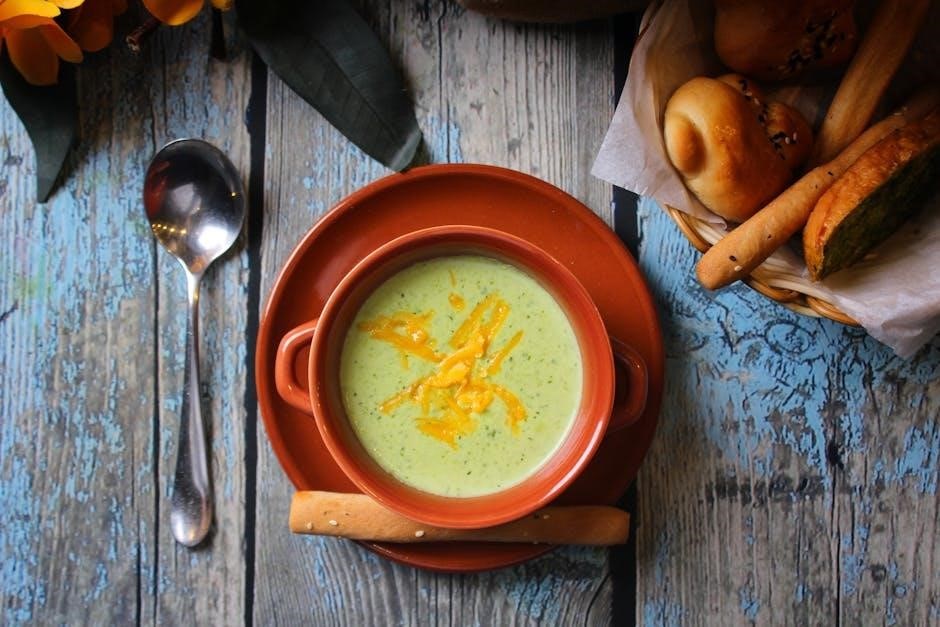
Morphy Richards soup makers excel at creating simple tomato soup and diverse vegetable soup variations, offering endless culinary exploration and delicious, homemade meals.

Simple Tomato Soup Recipe

Ingredients: 1 kg ripe tomatoes (chopped), 1 onion (quartered), 2 cloves garlic, 500ml vegetable stock, 1 tbsp olive oil, salt & pepper to taste.

Instructions: Place all ingredients into your Morphy Richards Soup Maker. Ensure ingredients are stirred thoroughly for even cooking. Select the appropriate soup program – typically a ‘Smooth’ setting. Allow the soup maker to complete its cycle, automatically cooking and blending the soup.

Once finished, carefully pour the soup into bowls and season to your preference. A swirl of cream or a sprinkle of basil enhances the flavor. Enjoy a quick and easy, homemade tomato soup!

Vegetable Soup Variations

Root Vegetable Delight: Combine carrots, parsnips, potatoes, and leeks with vegetable stock. Add a pinch of thyme for earthy notes.

Mediterranean Medley: Use zucchini, bell peppers, tomatoes, and spinach. Enhance with a dash of oregano and a squeeze of lemon juice.

Spicy Carrot & Ginger: Blend carrots, ginger, a touch of chili, and coconut milk for an exotic flavor.

Remember to adjust liquid levels for desired consistency. Your Morphy Richards Soup Maker handles diverse vegetables effortlessly. Experiment with herbs and spices to create personalized, healthy, and flavorful soup variations!